Why homeowners choose composite
Composite boards are made from a blend of wood fibre and recycled plastic. They look like timber but won't rot, splinter or need staining, and the colour holds for years. For most of our customers that means a deck they can simply use, with a wash down now and then instead of sanding and repainting or re-treating every 2 to 5 years.
It costs more than softwood up front, but over the life of the deck it's usually the better-value option, particularly in a damp, shaded Manchester garden where softwood has a hard time.
What we build in composite
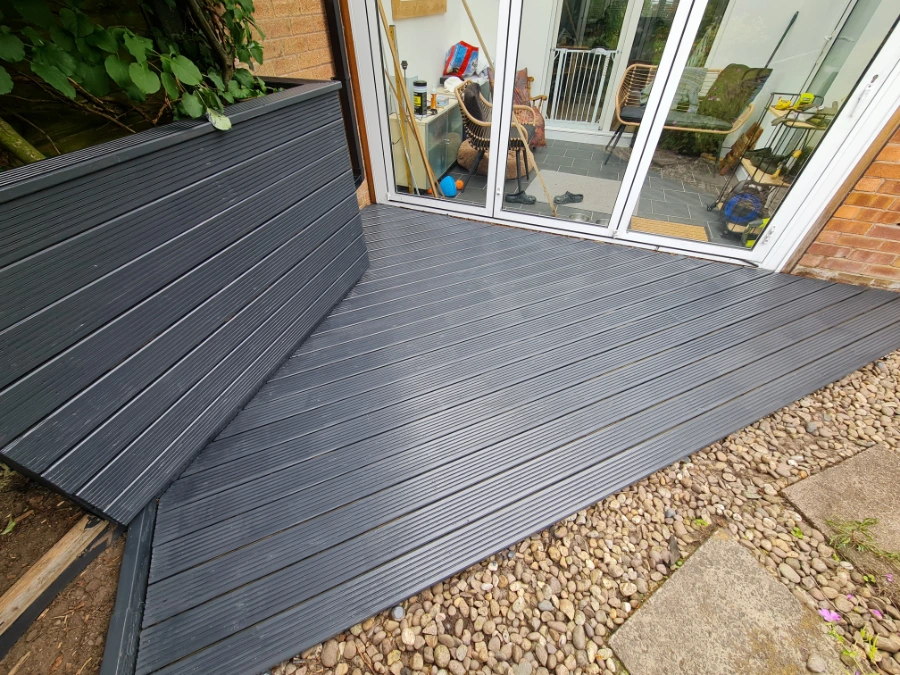
- Ground-level decks over old patios, gravel or tired lawn
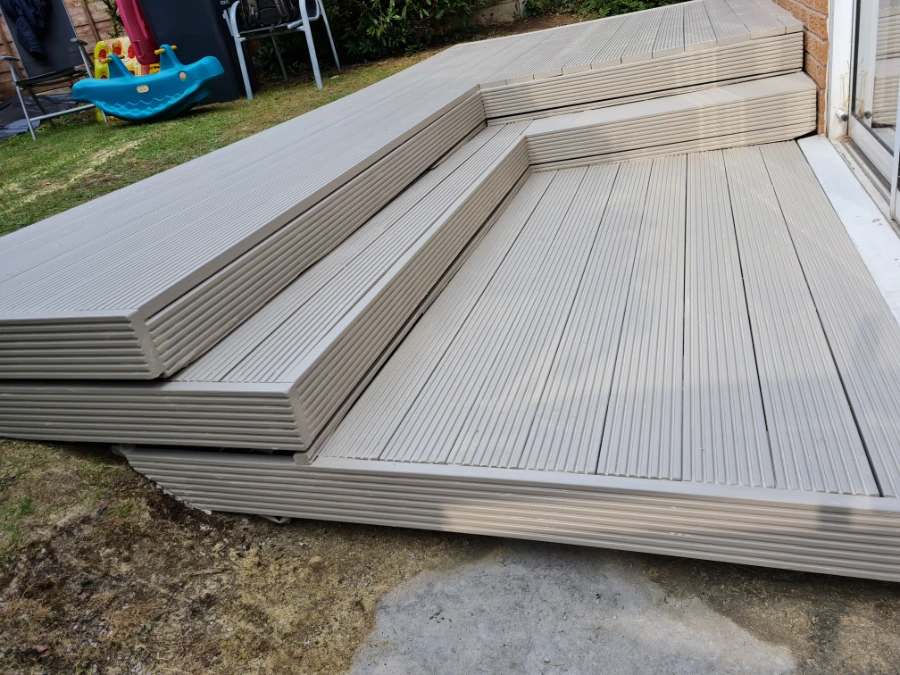
- Raised and multi-level decks for sloping gardens
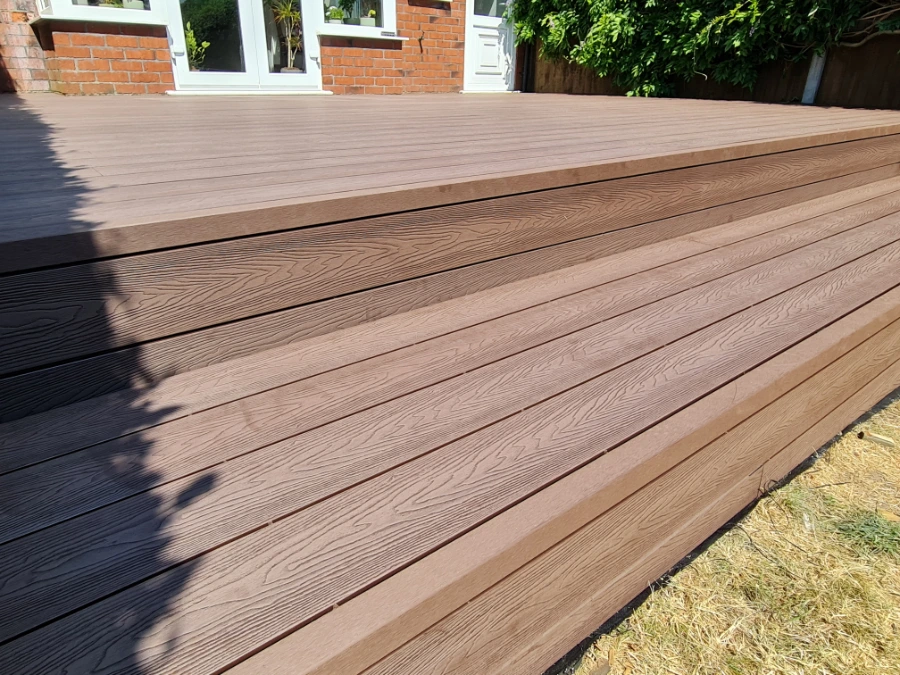
- Wraparound and full-width steps
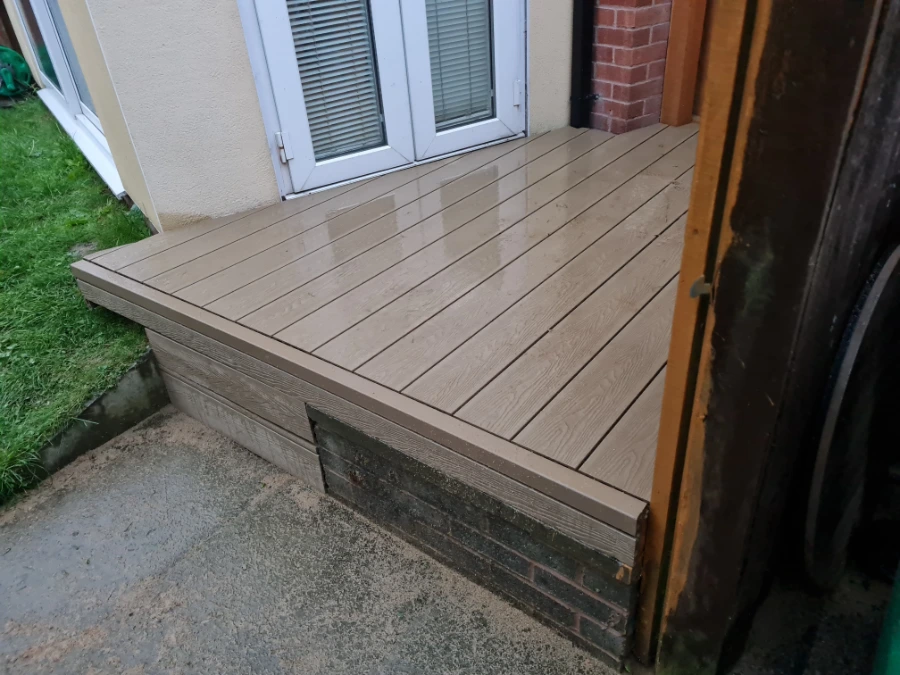
- Fascia boards and vented skirting to hide the frame
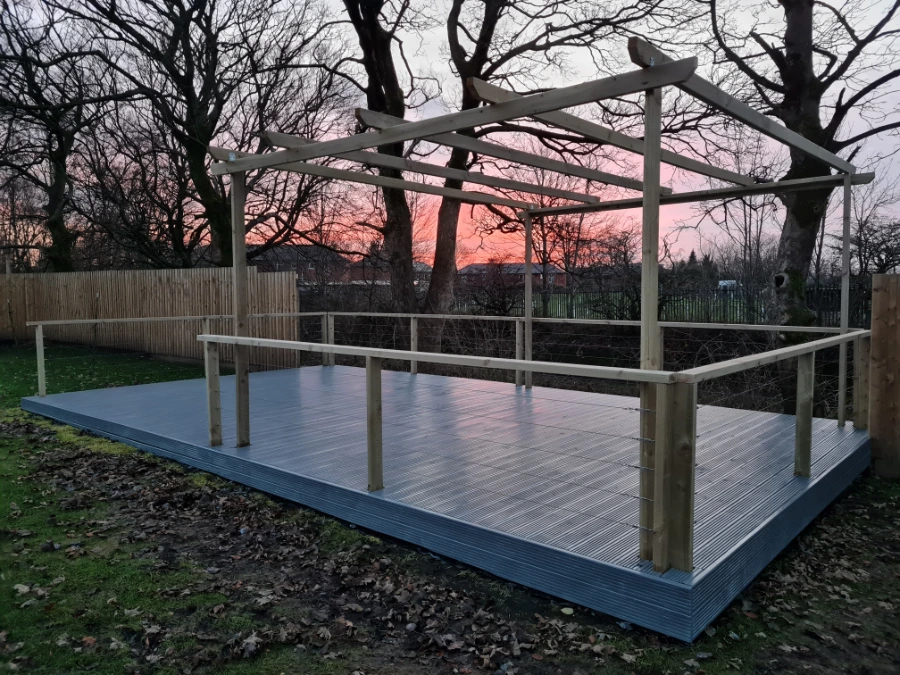
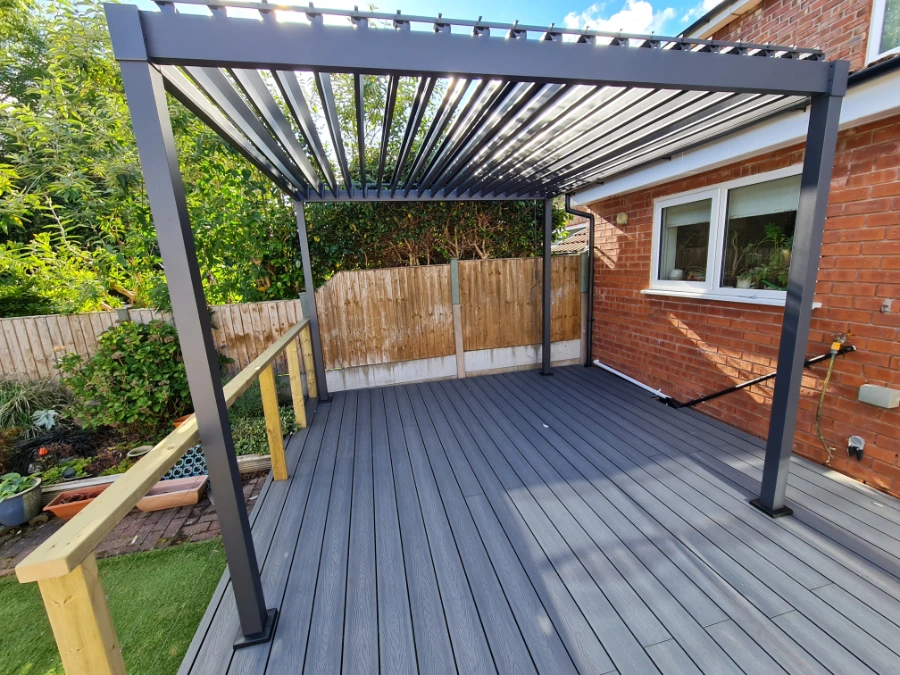
- Handrails and balustrades in composite, timber or metal
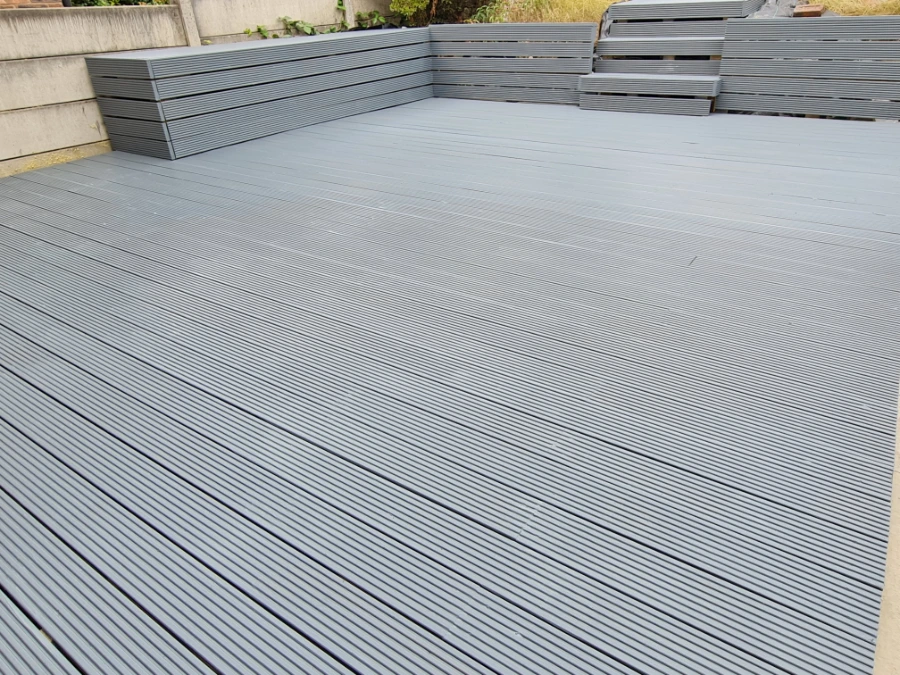
- Built-in planters, benches and storage
- Pergolas, louvred roofs and clear canopies over the deck
Colours and finishes
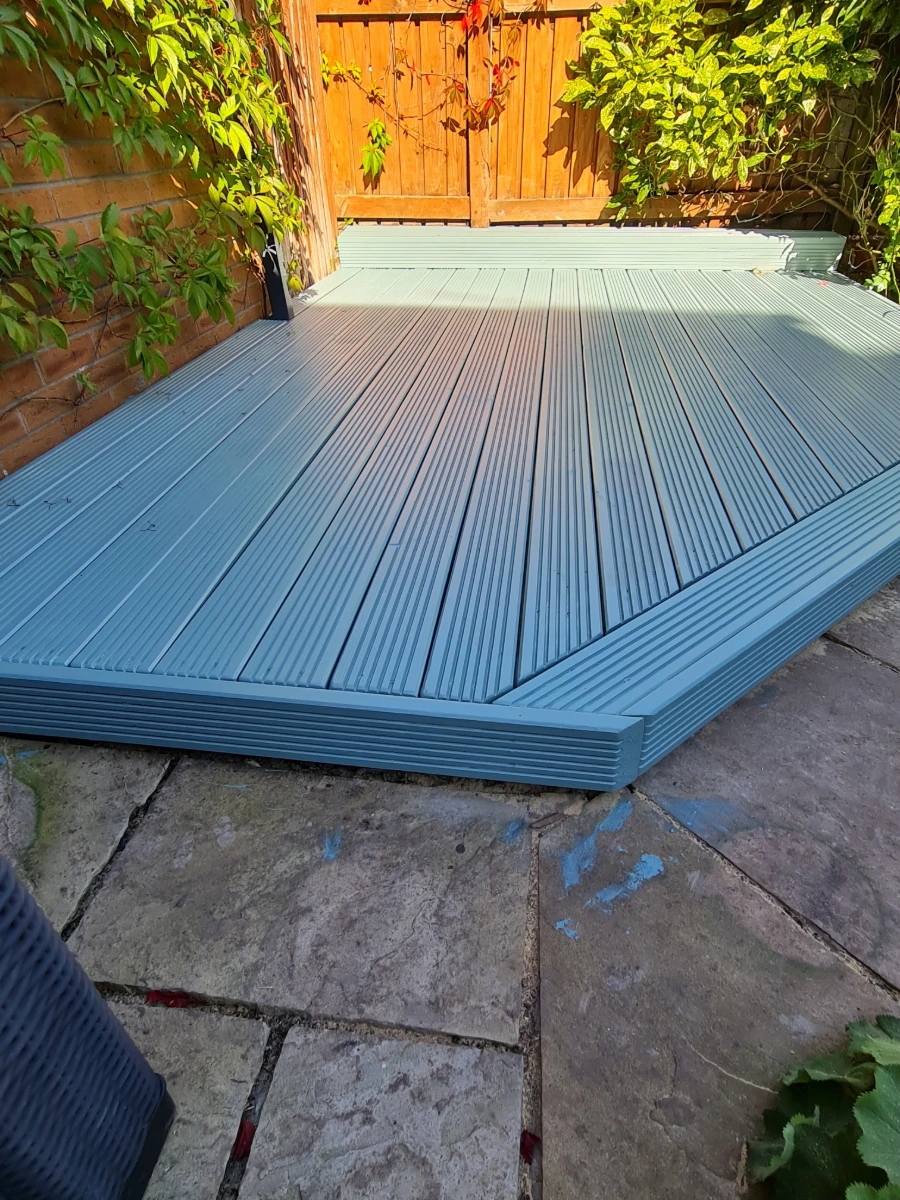
We've fitted grey, charcoal, light grey, blue-grey and brown composite, in both woodgrain and grooved finishes. We'll talk you through how each one will look in your garden and show you examples from past jobs. Darker boards warm up more in full summer sun; lighter greys show less dust and pollen. We'll help you weigh it up.
The frame matters more than the boards
Composite boards need their joists closer together than timber does. We follow the board manufacturer's joist spacing, fixings and expansion gaps to the letter, because that's what keeps a composite deck flat and quiet underfoot and keeps the manufacturer's warranty valid. Every frame is built from pressure-treated timber over a weed membrane, and we'll walk you round it before a single board goes down.
Composite or timber?
Not sure? That's what the site visit is for. See also timber and hardwood decking.